
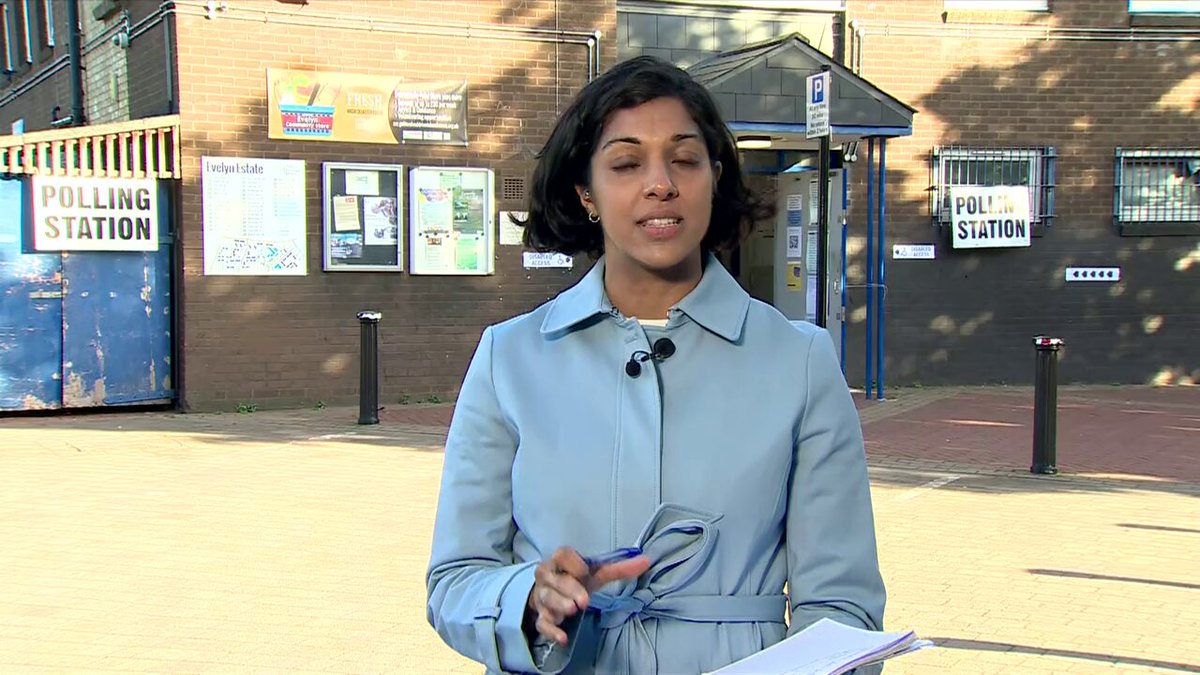
Leila Nathoo has become one of the most respected figures in contemporary British political reporting—a journalist whose name is increasingly synonymous with clarity, professionalism, and journalistic integrity. She has built an impressive career through hard work, deep intellectual curiosity, and an ability to make complex political landscapes understandable to everyday audiences. Her journey from an aspiring student to one of the BBC’s key political correspondents offers insights not only into her professional growth but also into the evolving landscape of news media itself.
Her reporting style reflects a blend of analytical precision and relatable communication—qualities that modern audiences value more than ever. In an era marked by polarization and misinformation, Nathoo’s approach exemplifies how political journalism can be both rigorous and accessible. This article delves deep into her personal background, career trajectory, reporting philosophy, challenges she has faced, and her role in shaping public discourse on politics.
Early Life and Background: The Foundations of a Journalist
Leila Nathoo’s early life and background are significant in understanding the person behind the journalist. Born and raised in the United Kingdom, she grew up in a multicultural environment that shaped her worldview and laid the foundation for her future career. Although Nathoo keeps much of her private early life out of the public eye, it is widely understood that her heritage is British South Asian, giving her a multicultural perspective that informs her reporting.
Her upbringing in the UK—where multiple cultures intersect and blend—contributed to her comfort with diversity and global viewpoints. For many reporters, such a background serves as fertile ground for developing empathy and cultural sensitivity, traits which naturally translate into more empathetic and contextual political analysis. Growing up in this environment likely nurtured Nathoo’s interest in stories that go beyond surface-level reporting to examine deeper social and systemic implications.
Education also played a crucial role in her development. British schooling systems, especially those with a strong emphasis on critical thinking and communication, prepared her intellectually for a career in journalism. The value placed on debate, discussion, and rigorous analysis in many UK schools often turns students into natural communicators—a skill Nathoo has demonstrated in her professional life.
Her early life, while kept private, clearly set the stage for a career defined by thoughtfulness and clarity. Rather than seeking the spotlight for personal achievements or background, Nathoo remains dedicated to reporting stories that matter, keeping her personal history as a quiet but meaningful influence in her approach to news.
Education and Intellectual Growth: How Nathoo Prepared for Journalism
Education is often the backbone of any successful career, and Leila Nathoo’s academic journey provided her with the analytical tools necessary for political journalism. She attended St Paul’s Girls’ School in Hammersmith, West London—a prestigious institution known for academic excellence and producing prominent alumni. This early exposure to high academic standards likely sharpened her communication skills and fostered an early appreciation for intellectual rigor.
After completing her schooling, Nathoo pursued higher education at Downing College, Cambridge—one of the most respected colleges at the University of Cambridge. Cambridge’s rigorous academic environment exposed her to deep intellectual debates, critical reasoning, and analytical methodologies that would serve her well in future journalistic work. Studying in such an environment helped Nathoo learn how to break down complexity, analyze facts, and communicate effectively—skills that are central to any journalist’s toolkit.
At Cambridge, her involvement extended beyond academics. Engagement with extracurricular activities broadened her social and intellectual horizons, leila nathoo enabling her to explore leadership, teamwork, and public speaking—all valuable skills for someone considering a career in media and communication. While specific details on her degree subject are not widely publicized, the intellectual discipline she gained undoubtedly shaped her professional mindset.
Importantly, her educational journey was not limited to theoretical knowledge. It was a formative period where practical communication, self‑expression, and analytical precision were cultivated—traits that define her current reporting style. Graduating from such esteemed institutions also positioned her well for competitive entry into world‑class news organisations like the BBC, where academic excellence and intellectual depth are highly valued.
Stepping into Journalism: Early Career and BBC Beginnings
After completing her education, Leila Nathoo entered the world of journalism—a field that rewards curiosity, resilience, and a disciplined approach to storytelling. She began her journey with the British Broadcasting Corporation (BBC), one of the most respected news organisations in the world. The BBC’s reputation for rigorous editorial standards and broad global reach makes it a premier destination for journalists seeking to impact public understanding of news.
Nathoo’s early years at the BBC involved training and reporting roles that gave her hands‑on experience in newsroom operations. The BBC’s structured trainee programmes are renowned for placing young journalists into a variety of reporting environments, helping them build confidence and versatility. From there, she took on assignments that expanded her skill set and exposed her to different facets of news coverage.
Crucially, Nathoo also gained experience reporting internationally in places like Nairobi and Delhi—assignments that broadened her understanding of global politics and cultural contexts. These early experiences not only strengthened her journalistic capabilities but also gave her a perspective that went beyond British politics alone. Such international exposure is invaluable for reporters who later cover global political events or explain how local policy decisions resonate on the world stage.
Over time, her reporting improved in depth and clarity, and she began handling stories with increasingly complex political contexts. These formative years laid the groundwork for her eventual role as a BBC political correspondent stationed in Westminster—the heart of British political life.
Becoming BBC Political Correspondent: Leadership in Reporting
Leila Nathoo’s appointment as a political correspondent at the BBC marked a major milestone in her career. As a BBC political correspondent, she covers the operations of Parliament, government policy announcements, leadership challenges, and national elections. Her work often puts her at the forefront of political developments, requiring both intellectual accuracy and a calm, informed delivery.
In this role, Nathoo has reported on some of the most consequential moments in recent British political history. Her coverage includes key events such as general elections, Brexit negotiations, leadership reshuffles, and major policy debates. Each of these assignments requires not just comprehension of facts, but the ability to translate them into meaningful narratives that viewers can understand and trust.
What sets Nathoo apart from many contemporaries is her ability to remain composed and clear under pressure. Political journalism can often be high‑stress, with real‑time developments demanding quick analysis and delivery. Her calm, thoughtful presentation style has earned her a reputation as someone who can break down complex issues without oversimplifying or sensationalising them—a rare and valued skill in today’s media landscape.
Her role also involves interviewing key political figures and participating in major BBC news programmes. Whether delivering reports live from Westminster or contributing to flagship radio shows, Nathoo continues to refine her authority as a credible voice in British political reporting.
Reporting Style and Public Trust
Leila Nathoo’s reporting style is rooted in clarity, objectivity, and trustworthiness—qualities essential to meaningful political journalism. In an era where news coverage can be overwhelmed by opinion, speculation, and sensationalism, her emphasis remains on factual accuracy and balanced perspectives.
Her viewers often remark on her calm disposition and ability to translate dense political jargon into explanations that are accessible without losing substance. This particular skill is highly valued in political reporting, where complex legislation or procedural developments can confuse even well‑informed audiences. Nathoo’s strength lies in her capacity to serve as both translator and guide, bringing transparency to topics that might otherwise remain opaque to the average viewer.
Another key aspect of her style is restraint. Rather than injecting personal opinion or speculative analysis, she focuses on clearly distinguishing confirmed facts from emerging developments. This approach reinforces public trust in her reporting and contributes to the BBC’s broader mission of impartial journalism.
In addition to television, she also contributes to radio broadcasts, where her voice becomes even more central in guiding audiences through the latest political developments. Whether on BBC Radio 4, BBC Radio 5 Live, or BBC World Service programmes, her presence brings consistency and credibility to news coverage across platforms.
Global Broadcasting and Expanding Influence
Leila Nathoo’s expertise isn’t confined to domestic British politics. Recently, she expanded her role by joining the BBC World Service’s flagship programme Newshour. This global platform reaches a massive international audience and positions her work within a wider context of world affairs.
Newshour is listened to by millions worldwide and offers a mix of in‑depth interviews, breaking news, and comprehensive analysis of global events. Nathoo’s inclusion in this presenting team highlights her ability not only to interpret British politics but to contextualise international stories in ways that speak to a global audience.
Her move to the World Service demonstrates both versatility and professional growth. Covering global political developments requires a broader understanding of how different national policies intersect, influence international relations, and affect global audiences. In this role, Nathoo has the opportunity to shape public understanding beyond the UK and contribute to a more informed global citizenry.
Whether discussing elections in Europe, diplomatic negotiations, or crises unfolding around the world, her growth into global journalism expands her influence and underscores her ability to adapt reporting for diverse audiences.
Challenges and Complexities of Political Reporting
Political journalism is not without its challenges. In covering public affairs, reporters must navigate a landscape filled with misinformation, strategic messaging from political players, and intense public scrutiny. For Nathoo, maintaining credibility means continually balancing transparency with critical analysis.
One of the core difficulties in today’s media environment is distinguishing fact from opinion in an age dominated by social media, partisan outlets, and rapid news cycles. Nathoo’s approach—prioritising fact‑checked information and verified sources—helps protect audiences from misinformation while reinforcing trust in traditional news media.
Moreover, as a political journalist, she faces the ongoing challenge of covering stories that are inherently polarising. Issues like Brexit, government reforms, public policy changes, and national elections are often fraught with strong emotions and political divides. Navigating these topics impartially requires not just expertise but also ethical resolve and deep respect for journalistic standards.
Reporting on international events adds another layer of complexity, as journalists must consider cultural nuances, legal implications, and ethical responsibilities when presenting stories to global audiences. Nathoo’s ability to navigate these challenges reflects professional maturity and a dedication to principled reporting.
Personal Life: Privacy and Professional Boundaries
Despite her public role, Leila Nathoo keeps her personal life notably private. Unlike many media figures who cultivate visibility across social platforms or make personal narratives part of their public persona, Nathoo chooses to focus attention on her professional work rather than her private affairs.
This distinction is noteworthy in an era where personal branding often overshadows substantive reporting. By keeping her personal details out of headlines, she reinforces the idea that journalistic credibility is built on performance, not personality. Her approach respects both her own privacy and the public’s interest in unbiased reporting—a balance many aspire to but few achieve in modern media.
This professional boundary allows her audience to engage with her work based on content alone—on how effectively she explains current affairs and facilitates public understanding, rather than on details of her personal life that are irrelevant to her role as a correspondent.
Legacy and Impact on Future Journalism
Leila Nathoo’s career trajectory demonstrates that impactful journalism relies on depth, integrity, and consistent clarity. She has served as an example to aspiring journalists—especially those from multicultural and minority backgrounds—of how to build a respected career in media without sacrificing ethical standards.
Her influence reaches beyond her individual stories; it includes contributing to a broader conversation about the role of journalists in democratic societies. When reporters prioritise accuracy over sensationalism, they strengthen public trust and elevate the quality of public discourse. Nathoo’s work embodies these values and sets a standard for future generations of journalists.
As the media landscape continues to evolve with technological shifts and changing audience expectations, leila nathoo journalists like Nathoo remind us that the fundamentals of good reporting—clarity, critical thinking, and ethical commitment—remain timeless.
Conclusion: A Journalist Defined by Integrity and Clarity
Leila Nathoo’s career is an inspiring example of how dedication, education, and professional integrity can combine to forge a meaningful path in journalism. From her early days in the UK to her pivotal role as a BBC political correspondent and international broadcaster, she has demonstrated that the essence of great reporting lies not in sensationalism, but in clear communication and unwavering commitment to truth.