
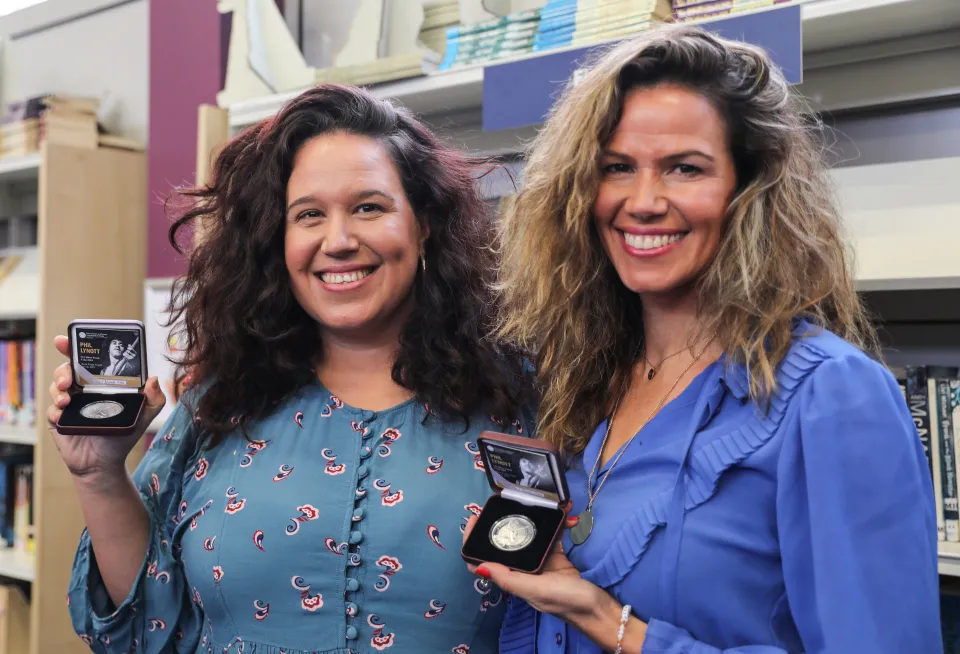
When you think of rock music icons from the 1970s and 1980s, names like Mick Jagger, Freddie Mercury, and David Bowie might come to mind. But tucked into the annals of classic rock history is a story more personal, tender, and often overlooked: the story of Sarah Lynott—the daughter of Irish rock legend Phil Lynott and the muse for one of his most heartfelt songs.
Unlike her father, who lived life in a blaze of fame and intensity as the frontman of Thin Lizzy, Sarah chose a quieter path. Her story lacks tabloid spectacle and mainstream headlines, but it carries a depth and nuance that makes her life fascinating in its own right. This article dives deep into who she is—her lineage, upbringing, connection to rock history, personal journey, career, and the way she has honored her family legacy while shaping her own life on her own terms.
Roots and Family History: The Roots of Sarah Lynott
The story of Sarah Lynott begins not in the spotlight of a stage, but within the complex tapestry of family heritage. Born on 19 December 1978, Sarah entered a world already deeply entwined with music and British‑Irish entertainment. Her father, Phil Lynott, had established himself as one of the most charismatic figures in rock as the founder, lead vocalist, bassist, and primary songwriter of the band Thin Lizzy.
Phil Lynott was not just a musician; he was a cultural force. Born in 1949 in West Bromwich, England, to Irish mother Philomena Lynott and Guyanese father Cecil Parris, he spent much of his childhood in Dublin, raised by his maternal grandparents. This blend of Irish cultural identity and multicultural heritage influenced his artistry throughout his life.
Sarah’s mother, Caroline Crowther, came from a British show‑business family—her father being the popular television comedian Leslie Crowther. This connection added another layer to Sarah’s heritage, blending Irish rock legacy with British entertainment tradition.
Growing up, Sarah’s family was geographically split between the UK and Ireland, but what remained constant was the emotional lineage that tied her to music and performance. That lineage would later become both a defining part of her identity and something she navigated with careful intention.
The Song That Bears Her Name: “Sarah”
Arguably the most famous cultural footprint tied to Sarah’s name is not a biography, a headline, or an award—it’s a song. In 1979, long before she had memories of the world, her father wrote a song simply titled “Sarah.”
Featured on Thin Lizzy’s album Black Rose: A Rock Legend, “Sarah” stood out from the band’s harder rock anthems. Rather than pounding guitars and swaggering bravado, the song is tender, melodic, and deeply emotional. Phil Lynott wrote it about his newborn daughter, capturing his feelings of love, awe, and transformation upon becoming a father.
For fans of the band, the track became a beloved departure from Thin Lizzy’s typical sound—a ballad that revealed a vulnerable and personal side of a man often seen as larger than life. It wasn’t just another song; it was a declaration of fatherly love, immortalizing Sarah in rock history in a way few daughters of famous musicians ever experience.
Even decades later, “Sarah” remains one of Phil Lynott’s most enduring songs, frequently celebrated by fans for its melody, sentiment, and backstory. Though the band itself never performed the song live in its original lineup, it resonated enough to be covered and kept alive in later performances by Lynott’s post‑Thin Lizzy project, Grand Slam.
Growing Up: Life Beyond Fame
Being the daughter of a famous musician can bring both opportunity and intense public scrutiny. Yet, Sarah’s upbringing was notably different from what you might expect of a child born into rock royalty. While her father’s fame was global, Sarah grew up primarily away from media frenzy and red‑carpet attention. According to biographical sources, she was raised with an emphasis on stability, education, and a sense of normalcy that her father sometimes struggled to achieve in his own life.
Her parents married in February 1980—shortly after her birth—when Phil Lynott and Caroline Crowther formalized their relationship. sarah lynott But like many unions in the entertainment world, theirs faced pressures both inside and outside the home. They later separated, and the marriage dissolved around 1984.
Sarah also has a sister, Cathleen Lynott, born in 1980, and a half‑brother, Macdaragh Lambe, who later discovered his connection to Phil Lynott. Š Despite the family’s public side, the siblings were raised in relative privacy, away from the constant gaze of tabloid media.
Throughout her upbringing, Sarah absorbed the cultural richness of both sides of her heritage. She experienced the creative world of music and performance through family narrative rather than public spectacle—and this distinction shaped how she viewed her own place in the world.
Personal Choices: Embracing Privacy
In a world where celebrity offspring often pursue fame themselves—whether through entertainment, modeling, or social media—Sarah chose a very different path. She opted for a life that emphasized personal fulfillment and meaningful contribution over public notoriety.
Unlike many children of rock icons, Sarah has intentionally stayed out of the limelight. When she does participate in public events, it is deliberately connected to celebrating her father’s legacy—not promoting herself. For example, she appeared in the acclaimed documentary Phil Lynott: Songs for While I’m Away, which explores her father’s life, music, and influence.
She has also contributed to conversations about her father’s legacy in Irish cultural programs and interviews but always with measured restraint and personal perspective. These appearances are rare, carefully chosen, and meaningful, reflecting her commitment to safeguarding her family’s narrative rather than exploiting it.
By maintaining her privacy, Sarah has carved out a space for herself that defies public expectation. In an age of oversharing and instant fame, her approach is a reminder that some lives are meant to be lived away from constant scrutiny—and that privacy can be a form of strength.
Professional Life: Creative, Independent, and Impactful
Despite her famous birthright, Sarah’s professional life reflects her own ambitions and creative strengths. According to available biographical sources, she built a multifaceted career rooted in creativity, organization, and event coordination—far removed from the performer life her father led.
Early in her adult life, after completing her education, she entered the music and events industry—not as a performer but as a professional behind the scenes. She gained experience working in production roles at large international festivals and tours, handling logistics, artist relations, and office coordination. Her work brought her into contact with major festivals, touring acts, and music professionals, demonstrating her ability to thrive in complex creative environments.
Her skills also extended into entrepreneurship. Together with her sister Cathleen, she co‑founded a handmade clothing brand and even opened a restaurant in Bath, England. These ventures reflected Sarah’s knack for creative business and community‑oriented projects.
Although some of these smaller businesses faced challenges—such as the unfortunate closure of the restaurant following an arson incident—they still showcased her willingness to explore diverse ventures and build something tangible with her own hands.
In later years, Sarah shifted into event management for private weddings, festivals, and corporate occasions—work that combines her logistical expertise with her passion for memorable experiences. Her portfolio also includes working with large ceremonies such as the BRIT Awards and MTV EMAs, establishing her reputation as a skilled and trusted professional in event coordination.
Family Life Today: Legacy and Next Generations
While she kept her early life largely private, public records note that Sarah has a long‑term partner named Robbie Tack, with whom she shares two children: Lola Lynott‑Tack and Cassian Lynott‑Tack.
Rather than making headlines for celebrity relationships, Sarah’s focus has remained on raising her children, nurturing creativity, and community involvement. Her family life reflects a blend of roots and values that emphasize connection, integrity, and love—traits inherited from her diverse cultural and familial experiences.
The double‑barrelled surname given to her children symbolizes both parents’ influence and suggests a modern family philosophy rooted in mutual respect and shared identity. It also ensures the Lynott name continues into the future—not as a relic of rock fame but as a living, present‑day lineage.
Even in private circles, Sarah’s children are growing with a unique heritage, blending the creative spirit of their grandfather with the grounded perspective of their mother.
Contributing to Legacy: Storytelling and Memory
Although she doesn’t seek fame for herself, Sarah plays a meaningful role in preserving her family’s story. Her contributions to documentaries, tributes, and public conversations about her father help ensure that the true narrative of his life—and by extension her own family history—is told accurately and respectfully.
These moments of public engagement are not about self‑promotion; they are acts of storytelling and legacy‑keeping. sarah lynott By sharing personal memories, Clara contextualizes Phil Lynott’s genius with the human relationships behind it, offering fans a fuller understanding of the man behind the music.
In doing so, she honors not only her father but the emotional resonance of his art, reminding audiences that music isn’t just sound—it’s connection, story, and heart.
Conclusion: Final Thoughts: A Life Beyond the Spotlight
Some legacies are loud, dramatic, and always on display. Others are quiet, grounded, and rich with meaning beneath the surface. Sarah Lynott falls squarely into the latter category.
Her life is not defined by fame or constant public attention, but by personal choices that reflect resilience, creativity, and intentional living. She honors her father’s memory not by reliving his fame, but by living her life authentically—cherishing her family, building a career with substance, and protecting what matters most.
In exploring Sarah’s story, we see not just the daughter of a rock legend, but a woman of thoughtful purpose, creative talent, and a meaningful sense of self. Her legacy is not measured in chart‑topping hits or magazine covers, but in the lives she touches—her own children, her community, and fans who connect with her father’s music more deeply because of the story behind the song.